
 Trading Strategies
 Price Action analysis
 Risk Management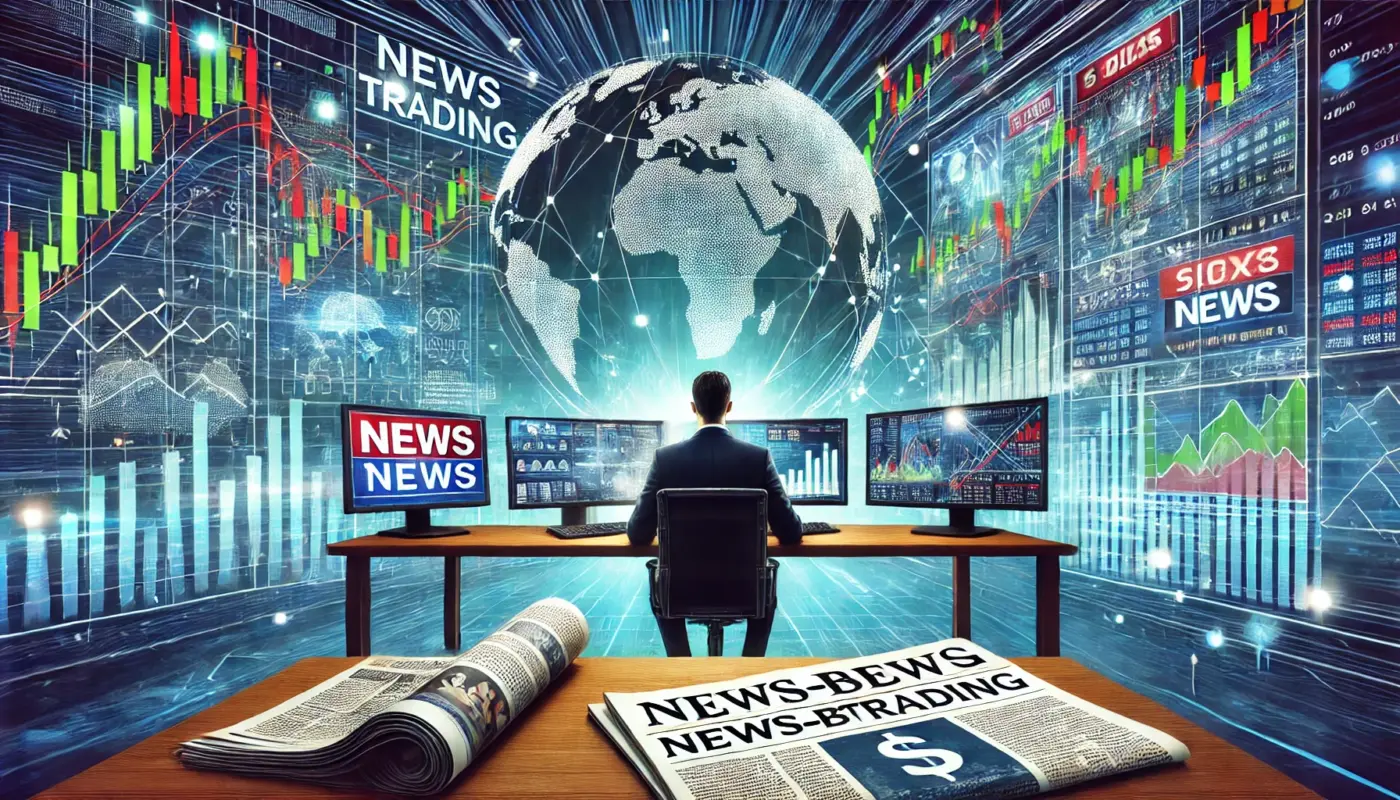
What is News-Based Trading?
News-based trading involves capitalizing on price volatility triggered by market-moving events like earnings reports, economic data releases (e.g., CPI, GDP), central bank announcements, or geopolitical developments. Traders aim to enter positions before or immediately after news breaks to ride short-term price swings.
How News-Based Trading Works
- Identify High-Impact Events:
- Earnings Reports: Companies like Apple, Tesla, or NVIDIA often see large price gaps.
- Economic Data: Non-Farm Payrolls (NFP), Federal Reserve rate decisions, CPI inflation reports.
- Geopolitical News: Trade wars, elections, or supply chain disruptions.
- Prepare in Advance:
- Use an economic calendar (e.g., Forex Factory, Investing.com) to track event timings.
- Analyze historical reactions to similar news (e.g., how stocks react to Fed rate hikes).
- Execute Quickly:
- Pre-News Positioning: Enter before the event based on expectations (risky but high reward).
- Post-News Reaction: Trade the momentum after the news confirms (e.g., breakout above resistance).
- Exit Strategically:
- Take profits quickly (minutes to hours) before volatility fades.
- Use trailing stops to lock in gains.
Key Tools & Resources
- Real-Time News Feeds: Bloomberg, Reuters, Benzinga Pro.
- Economic Calendars: Forex Factory, Investing.com, Trading Economics.
- Scanners: Trade Ideas (filters for news-triggered stocks), Earnings Whisper.
- Fast Execution Brokers: Interactive Brokers, MetaTrader (minimize slippage).
Pros of News-Based Trading
- High Profit Potential: Exploit sharp price movements (e.g., 5–10% intraday swings).
- Clear Catalysts: News events provide concrete reasons for market moves.
- Versatility: Works in stocks, forex, crypto, and commodities.
Cons of News-Based Trading
- Extreme Volatility: Prices can reverse abruptly (e.g., „buy the rumor, sell the news“).
- Slippage Risk: Fast-moving markets may fill orders at poor prices.
- Information Overload: Requires filtering noise to focus on high-impact events.
Risk Management Tips
- Use Stop-Loss Orders: Limit losses to 1–2% of capital per trade.
- Trade Small Positions: News-driven moves are unpredictable—avoid overexposure.
- Verify Sources: Avoid fake news by relying on reputable platforms (e.g., official Fed statements).
- Avoid Low-Liquidity Assets: Stick to high-volume instruments to reduce slippage.
Common News Trading Strategies
- Earnings Play:
- Pre-Earnings: Buy call/put options ahead of earnings if expecting a surprise.
- Post-Earnings Gap: Trade the gap up/down at market open (e.g., Gap and Go strategy).
- Central Bank Announcements:
- Trade forex pairs (e.g., EUR/USD) during Fed or ECB rate decisions.
- Buy volatility ETFs (e.g., VXX) if expecting market turbulence.
- Economic Data Scalping:
- Trade forex or indices (e.g., S&P 500) immediately after NFP or CPI releases.
Example Trade: Trading the Fed Rate Decision
- Event: Federal Reserve announces a 0.25% rate hike.
- Expectation: Market anticipates the hike, but Fed signals a dovish pause afterward.
- Action: Buy gold (XAU/USD) as the USD weakens.
- Entry: $1,800/oz.
- Exit: $1,820/oz. (2% gain) after dovish statement.
- Stop-Loss: $1,790/oz.
Tools & Platforms
- News Aggregators: Benzinga Pro, Seeking Alpha (real-time alerts).
- Volatility Indicators: CBOE Volatility Index (VIX), ATR (Average True Range).
- Brokers with News Integration: eToro, TD Ameritrade (live news on trading platforms).
Avoiding Common Mistakes
- FOMO (Fear of Missing Out): Don’t chase a move after the initial spike.
- Ignoring Consensus Forecasts: Trade the deviation from expectations (e.g., CPI higher than forecasted).
- Overlooking Liquidity: Avoid illiquid stocks or currency pairs during news events.
News Trading vs. Other Strategies
| Aspect | News Trading | Swing Trading | Scalping |
|---|---|---|---|
| Timeframe | Minutes to hours | Days to weeks | Seconds to minutes |
| Focus | Event-driven volatility | Technical setups | Tiny price movements |
| Risk | High (volatility) | Moderate | High (frequency) |
FAQ
Q: What’s the best time to trade news?
A: During major economic releases (e.g., NFP at 8:30 AM EST) or earnings pre-market/open.
Q: How do I handle fake news?
A: Cross-check with reputable sources and avoid acting on unverified social media rumors.
Q: Can algorithmic trading beat manual news trading?
A: Yes—algos react faster, but retail traders can focus on high-impact, slower-moving events.
Conclusion
News-based trading offers explosive opportunities but demands discipline, preparation, and quick reflexes. Focus on high-impact events, use strict risk management, and stay updated with reliable sources.
Contents
- 1 What is News-Based Trading?
- 2 How News-Based Trading Works
- 3 Key Tools & Resources
- 4 Pros of News-Based Trading
- 5 Cons of News-Based Trading
- 6 Risk Management Tips
- 7 Common News Trading Strategies
- 8 Example Trade: Trading the Fed Rate Decision
- 9 Tools & Platforms
- 10 Avoiding Common Mistakes
- 11 News Trading vs. Other Strategies
- 12 FAQ
- 13 Conclusion