

 Trading Strategies
 Price Action analysis
 Risk Management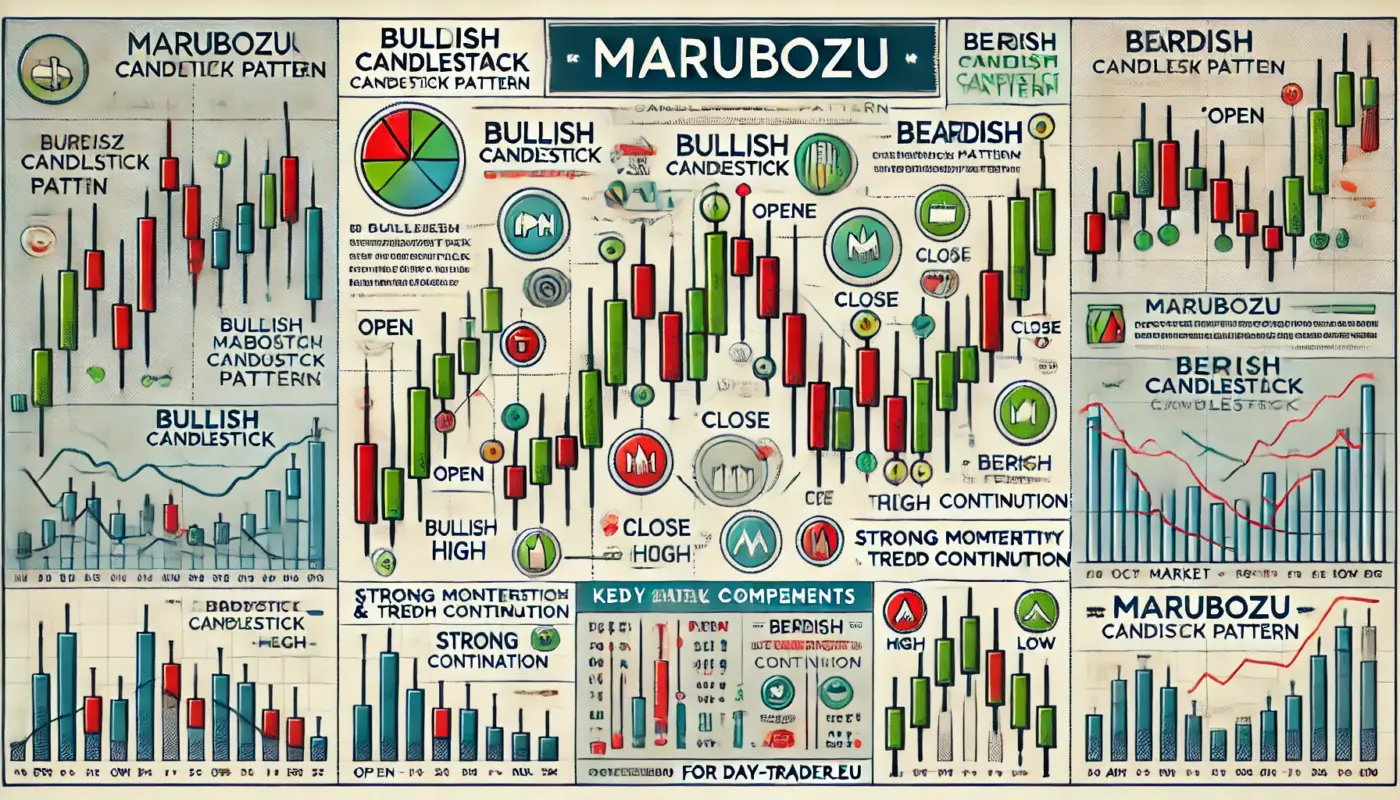
Marubozu Candlestick Pattern: A Complete Guide for Day Traders
The Marubozu candlestick pattern is a powerful and straightforward tool in technical analysis. Known for its strong signals, the Marubozu can help day traders identify continuation or reversal trends with high confidence. In this guide, we’ll explore everything you need to know about the Marubozu candlestick pattern, including how to identify it, interpret it, and trade it effectively. This content is tailored for the audience at day-trader.eu.
What Is a Marubozu Candlestick?
The Marubozu is a single candlestick pattern that has no wicks (shadows). The name „Marubozu“ comes from the Japanese word for „bald“ or „close-cropped,“ reflecting its clean, wickless appearance. It represents strong buying or selling pressure throughout the trading session.
There are two types of Marubozu:
- Bullish Marubozu: The candle has no upper or lower wick, with the open price equal to the low and the close price equal to the high.
- Bearish Marubozu: The candle has no upper or lower wick, with the open price equal to the high and the close price equal to the low.
How to Identify a MarubozuCandlestick Pattern
To recognize a Marubozu, look for the following features:
- No Wicks: The candlestick has no upper or lower shadows.
- Strong Body: The body is long, indicating strong momentum in the direction of the trend.
- Color:
- Bullish Marubozu: Green or white body.
- Bearish Marubozu: Red or black body.
What Does a Marubozu Candlestick Pattern Mean?
The Marubozu represents strong momentum in the direction of the trend. Here’s what it signifies:
- Bullish Marubozu: Indicates strong buying pressure, with buyers controlling the price action from the open to the close.
- Bearish Marubozu: Indicates strong selling pressure, with sellers controlling the price action from the open to the close.
How to Interpret a Marubozu in Different Contexts
The meaning of a Marubozu depends on its location within the price action. Here’s how to interpret it in various scenarios:
1. During an Uptrend
- Bullish Marubozu: Signals strong buying pressure and suggests the uptrend will continue.
- Bearish Marubozu: Signals a potential reversal or pullback in the uptrend.
2. During a Downtrend
- Bearish Marubozu: Signals strong selling pressure and suggests the downtrend will continue.
- Bullish Marubozu: Signals a potential reversal or pullback in the downtrend.
3. At Key Support or Resistance Levels
- Bullish Marubozu at Support: Indicates a strong bounce off support, suggesting a potential upward reversal.
- Bearish Marubozu at Resistance: Indicates a strong rejection at resistance, suggesting a potential downward reversal.
How to Trade the Marubozu Candlestick Pattern
Trading the Marubozu is straightforward due to its strong signals. Here’s a step-by-step guide:
Step 1: Identify the Marubozu
Look for a candlestick with no wicks and a long body.
Step 2: Analyze the Context
Determine whether the Marubozu is appearing during an uptrend, downtrend, or at key support/resistance levels.
Step 3: Enter the Trade
- Bullish Marubozu: Enter a long position after the candle closes.
- Bearish Marubozu: Enter a short position after the candle closes.
Step 4: Set Entry and Exit Points
- Entry: Enter the trade at the opening of the next candle.
- Stop-Loss: Place a stop-loss order below the low of the Marubozu (for a bullish trade) or above the high (for a bearish trade).
- Take-Profit: Use support/resistance levels or a risk-reward ratio to set your take-profit target.
Examples of Marubozu Candlestick Pattern in Action
- Bullish Marubozu Example:
- A Bullish Marubozu forms after a pullback in an uptrend.
- Traders enter a long position and profit as the price continues to rise.
- Bearish Marubozu Example:
- A Bearish Marubozu forms after a rally in a downtrend.
- Traders enter a short position and profit as the price continues to fall.
Advantages of Trading the Marubozu Candlestick Pattern
- Strong Signal: The Marubozu provides a clear and strong signal of market momentum.
- Versatility: It can be used in any market (stocks, forex, crypto) and on any time frame.
- Combines Well with Other Tools: Use the Marubozu alongside technical indicators like moving averages, RSI, or MACD for stronger signals.
Limitations of the Marubozu Candlestick Pattern
- Rare in Real Markets: True Marubozu patterns are rare, as most candlesticks have at least small wicks.
- Requires Context: The Marubozu’s meaning depends on its location within the trend. Always analyze the broader market context.
Why the Marubozu Matters for Day Traders
The Marubozu is a valuable tool for day traders because it highlights moments of strong momentum. By understanding and trading this pattern, you can improve your ability to predict price movements and make better trading decisions.
At day-trader.eu, we’re committed to helping you master candlestick patterns like the Marubozu. Visit our website for more guides, strategies, and resources tailored for day traders.
Final Thoughts
The Marubozu candlestick pattern is a powerful tool for identifying strong momentum and potential trend continuations or reversals. By learning to recognize and trade this pattern, you’ll gain a deeper understanding of price action and improve your trading performance.
Ready to take your trading to the next level? Visit day-trader.eu for more insights, tips, and strategies to help you succeed in the fast-paced world of day trading!
Contents
- 1 What Is a Marubozu Candlestick?
- 2 How to Identify a MarubozuCandlestick Pattern
- 3 What Does a Marubozu Candlestick Pattern Mean?
- 4 How to Interpret a Marubozu in Different Contexts
- 5 How to Trade the Marubozu Candlestick Pattern
- 6 Examples of Marubozu Candlestick Pattern in Action
- 7 Advantages of Trading the Marubozu Candlestick Pattern
- 8 Limitations of the Marubozu Candlestick Pattern
- 9 Why the Marubozu Matters for Day Traders
- 10 Final Thoughts