
 Trading Strategies
 Price Action analysis
 Risk Management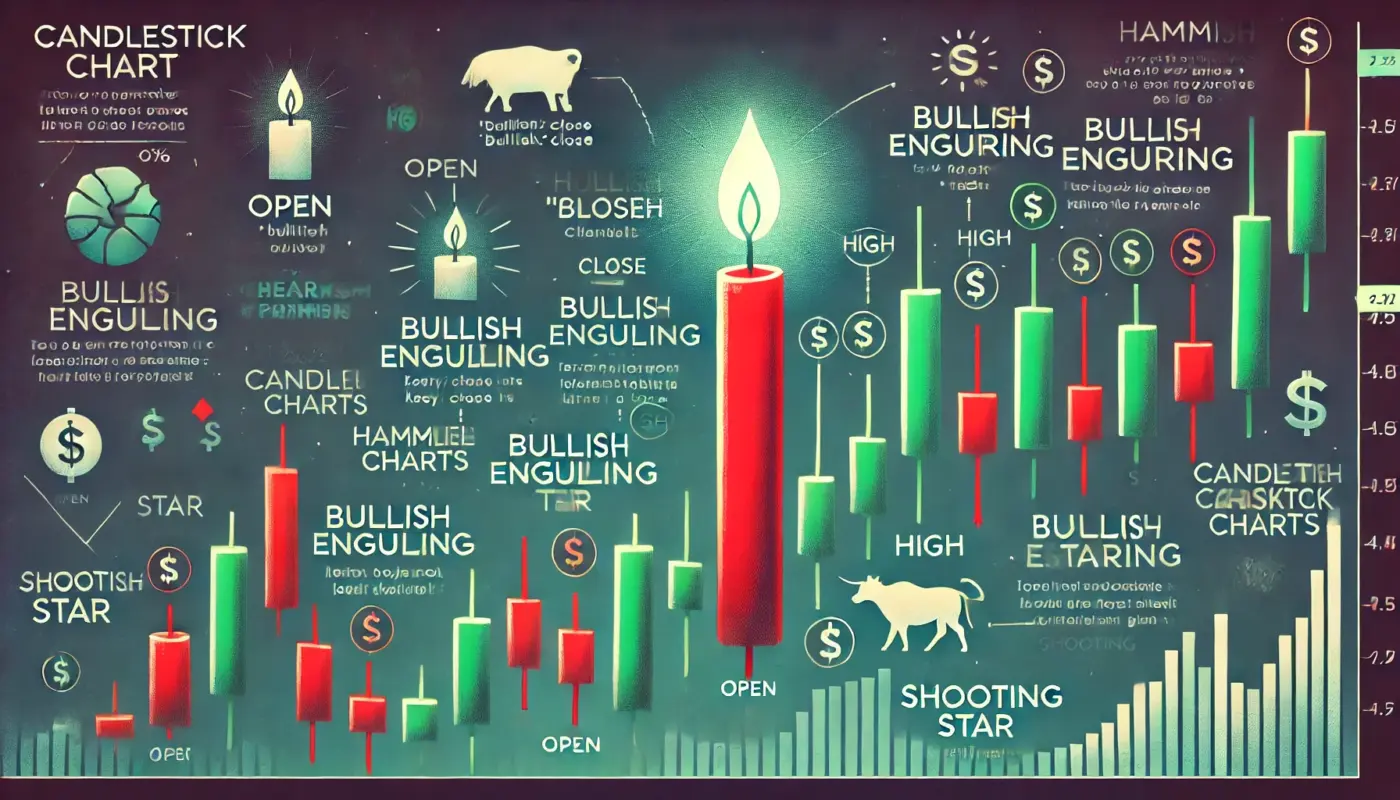
Introduction to Candlesticks: A Beginner’s Guide for Day Traders
Candlestick charts are one of the most powerful tools in a day trader’s arsenal. They provide a visual representation of price movements and help traders make informed decisions. Whether you’re trading stocks, forex, or cryptocurrencies, understanding candlesticks is essential for success. In this Introduction to Candlesticks, we’ll break down everything you need to know to get started, tailored for the audience at day-trader.eu.
What Are Candlesticks?
Candlesticks are a type of price chart used in technical analysis. Each candlestick represents the price movement of an asset over a specific time period, such as one minute, one hour, or one day. They originated in Japan over 300 years ago and have since become a staple in modern trading.
Anatomy of a Candlestick
A single candlestick consists of four key components:
- Open Price: The price at which the asset opened during the time period.
- Close Price: The price at which the asset closed during the time period.
- High Price: The highest price reached during the time period.
- Low Price: The lowest price reached during the time period.
The body of the candlestick represents the range between the open and close prices, while the wicks (or shadows) show the high and low prices.
Bullish vs. Bearish Candlesticks
- Bullish Candlestick: When the close price is higher than the open price, the candlestick is typically colored green or white. This indicates buying pressure and a potential upward trend.
- Bearish Candlestick: When the close price is lower than the open price, the candlestick is usually colored red or black. This signals selling pressure and a potential downward trend.
Common Candlestick Patterns
Candlestick patterns are formations that provide insights into market sentiment and potential price movements. Here are some of the most common patterns every day trader should know:
1. Doji
A Doji forms when the open and close prices are nearly equal, creating a cross or plus sign shape. It indicates market indecision and can signal a potential reversal.
2. Hammer
A Hammer has a small body and a long lower wick. It often appears at the bottom of a downtrend and signals a potential bullish reversal.
3. Shooting Star
A Shooting Star has a small body and a long upper wick. It typically appears at the top of an uptrend and suggests a potential bearish reversal.
4. Engulfing Pattern
An Engulfing Pattern occurs when a larger candlestick completely „engulfs“ the previous smaller candlestick. A bullish engulfing pattern signals a potential upward reversal, while a bearish engulfing pattern indicates a potential downward reversal.
5. Morning Star and Evening Star
- Morning Star: A three-candlestick pattern that signals a bullish reversal. It consists of a long bearish candle, a small indecision candle, and a long bullish candle.
- Evening Star: A three-candlestick pattern that signals a bearish reversal. It consists of a long bullish candle, a small indecision candle, and a long bearish candle.
How to Use Candlesticks in Day Trading
- Identify Trends: Use candlesticks to spot trends and determine whether the market is bullish, bearish, or ranging.
- Spot Reversals: Look for reversal patterns like Doji, Hammer, or Engulfing to predict potential trend changes.
- Set Entry and Exit Points: Use candlestick patterns to identify optimal entry and exit points for your trades.
- Combine with Indicators: Enhance your analysis by combining candlesticks with technical indicators like moving averages, RSI, or MACD.
Benefits of Using Candlestick Charts
- Visual Clarity: Candlesticks provide a clear and concise view of price action.
- Versatility: They can be used for any time frame, making them ideal for day traders.
- Predictive Power: Candlestick patterns often provide early signals of market reversals or continuations.
Tips for Beginners
- Start Simple: Focus on learning the basic candlestick patterns before moving on to more complex ones.
- Practice: Use a demo account to practice reading candlestick charts without risking real money.
- Stay Disciplined: Always combine candlestick analysis with proper risk management strategies.
Why Candlesticks Matter for Day Traders
Candlestick charts are an essential tool for day traders because they provide real-time insights into market sentiment and price movements. By mastering candlestick analysis, you can improve your trading accuracy and make better-informed decisions.
At day-trader.eu, we’re dedicated to helping you master the art of trading. Whether you’re a beginner or an experienced trader, understanding candlesticks is a crucial step toward achieving your trading goals.
Final Thoughts Introduction to Candlesticks: A Beginner’s Guide for Day Traders
Candlestick charts are more than just a visual representation of price movements—they’re a window into the psychology of the market. By learning to read and interpret candlesticks, you’ll gain a deeper understanding of market dynamics and improve your trading performance.
Ready to take your trading to the next level? Visit day-trader.eu for more guides, strategies, and resources tailored for day traders like you!
Contents
- 1 Introduction to Candlesticks: A Beginner’s Guide for Day Traders
- 2 What Are Candlesticks?
- 3 Anatomy of a Candlestick
- 4 Bullish vs. Bearish Candlesticks
- 5 Common Candlestick Patterns
- 6 How to Use Candlesticks in Day Trading
- 7 Benefits of Using Candlestick Charts
- 8 Tips for Beginners
- 9 Why Candlesticks Matter for Day Traders
- 10 Final Thoughts Introduction to Candlesticks: A Beginner’s Guide for Day Traders