

 Trading Strategies
 Price Action analysis
 Risk Management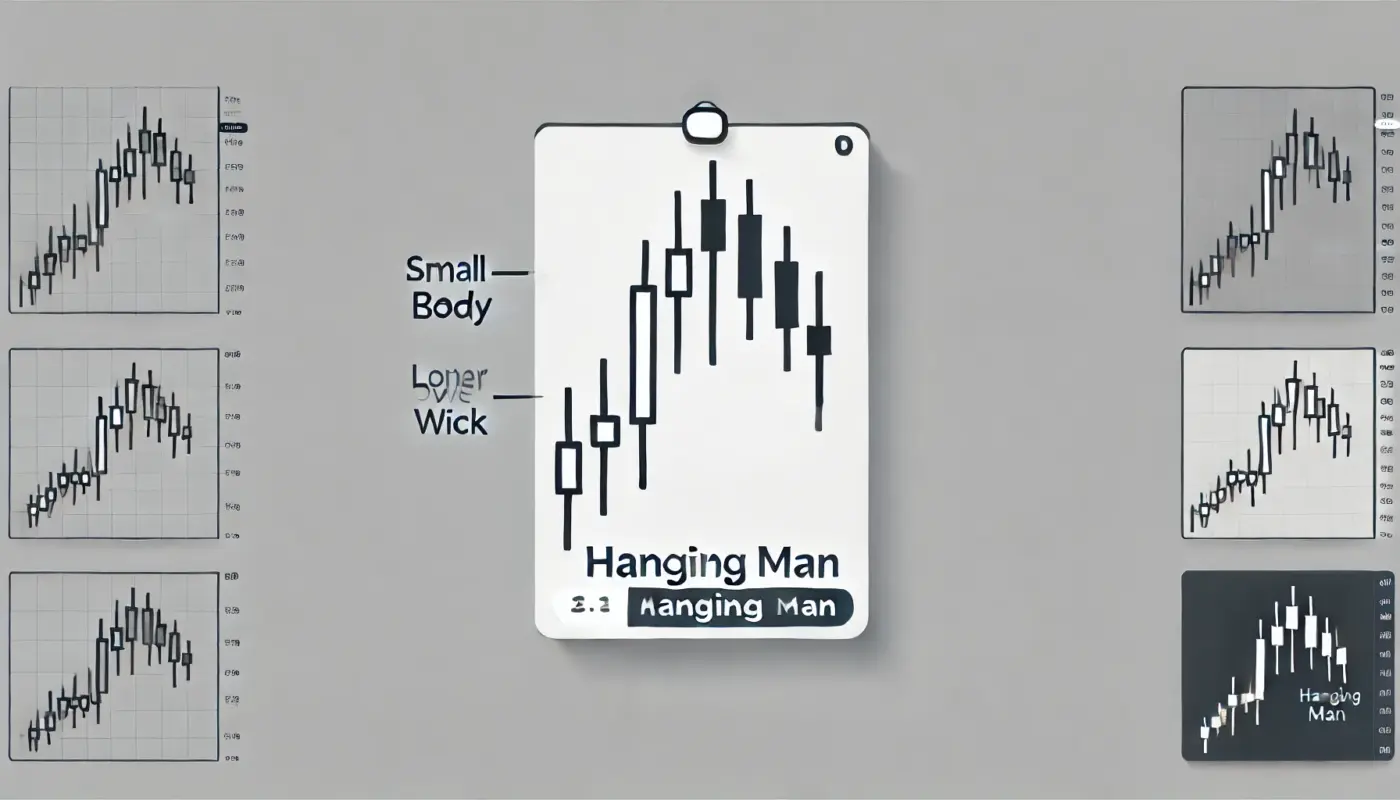
Hanging Man Candlestick Pattern: A Key Bearish Reversal Signal
Introduction
The Hanging Man candlestick pattern is a widely recognized bearish reversal pattern that appears at the end of an uptrend. Traders use this pattern to identify potential trend reversals and make informed trading decisions. Recognizing and interpreting this pattern correctly can help traders anticipate downward price movements and avoid potential losses.
In this comprehensive guide, we will explore the Hanging Man pattern, its characteristics, significance, trading strategies, and how to differentiate it from similar candlestick patterns.
What is the Hanging Man Candlestick Pattern?
The Hanging Man is a single candlestick pattern that typically occurs after an extended uptrend. It has a small real body near the top of the price range and a long lower shadow, with little to no upper shadow. The pattern indicates that although buyers pushed the price higher, selling pressure increased significantly during the session, hinting at a potential bearish reversal.
Key Characteristics of the Hanging Man Candlestick Pattern:
- Occurs in an uptrend – The pattern signals a possible reversal from bullish to bearish momentum.
- Small real body – The closing price is close to the opening price.
- Long lower shadow – The lower wick should be at least twice the length of the real body.
- Little to no upper shadow – A small or absent upper wick strengthens the signal.
- Confirmation required – A subsequent bearish candle closing below the Hanging Man confirms the reversal.
The Psychology Behind the Hanging Man Pattern
Understanding the psychology of market participants when a Hanging Man appears is crucial:
- During the session: The price opens high, but strong selling pressure forces it significantly lower.
- Buyers attempt recovery: The price rebounds before the close, creating a small real body.
- Bearish signal: Despite the recovery, the long lower wick shows that sellers have started gaining control.
- Confirmation needed: A bearish candle closing below the Hanging Man in the next session confirms the trend reversal.
How to Trade the Hanging Man Candlestick Pattern
To effectively trade the Hanging Man candlestick pattern, follow these steps:
1. Identify the Pattern in an Uptrend
- Ensure the price has been in a sustained uptrend before the pattern appears.
- Verify that the candlestick has a long lower shadow and small real body.
2. Wait for Confirmation
- A bearish candlestick closing below the Hanging Man confirms the trend reversal.
- Additional indicators, such as RSI divergence or a bearish MACD crossover, can strengthen the signal.
3. Enter a Short Trade
- Place a sell order once a bearish candle confirms the pattern.
- More conservative traders may wait for further confirmation, such as a break below a key support level.
4. Set Stop-Loss and Take-Profit Levels
- Stop-Loss: Above the Hanging Man’s high to avoid false signals.
- Take-Profit: Identify the next support level or use a risk-reward ratio like 1:2.
Difference Between Hanging Man and Hammer Candlestick Pattern
The Hanging Man and the Hammer share similar structures but appear in different market conditions:
| Feature | Hanging Man | Hammer |
|---|---|---|
| Trend | Appears after an uptrend | Appears after a downtrend |
| Indicates | Bearish reversal | Bullish reversal |
| Signal Strength | Stronger when followed by a bearish confirmation candle | Stronger when followed by a bullish confirmation candle |
Common Mistakes When Trading the Hanging Man Candlestick Pattern
- Ignoring confirmation: Never trade solely based on the Hanging Man; wait for a bearish candle.
- Overtrading: Not every Hanging Man leads to a reversal; check additional indicators.
- Setting stop-loss too tight: Give the trade some room to avoid getting stopped out prematurely.
FAQ: Hanging Man Candlestick Pattern
1. Is the Hanging Man pattern always a bearish signal?
No, while the Hanging Man suggests a potential bearish reversal, confirmation is required through a subsequent bearish candle. Without confirmation, the price could continue upward.
2. Can the Hanging Man appear in a downtrend?
No, a Hanging Man must appear after an uptrend. If a similar candlestick appears in a downtrend, it is called a Hammer, which is a bullish reversal signal.
3. How can I confirm a Hanging Man pattern?
A confirmation occurs when the next candlestick closes below the Hanging Man’s low, indicating sustained selling pressure.
4. What timeframe is best for trading the Hanging Man pattern?
The daily timeframe is the most reliable, but traders also use 4-hour or 1-hour charts for shorter-term trades.
5. Should I rely solely on the Hanging Man pattern for trading decisions?
No, always use additional indicators such as RSI, MACD, volume analysis, or trend lines to confirm the signal before entering a trade.
6. Does the color of the Hanging Man candle matter?
A red (bearish) Hanging Man is generally stronger than a green (bullish) one because it indicates more immediate selling pressure.
Final Thoughts
The Hanging Man candlestick pattern is a powerful bearish reversal signal that traders should use in combination with other technical indicators. Confirmation is key—a bearish candle after the pattern increases its reliability. By implementing proper risk management and recognizing this pattern in the right market context, traders can enhance their decision-making and improve their trading success.
Would you like to see real-world examples or chart illustrations of this pattern? Let me know!
Contents
- 1 Hanging Man Candlestick Pattern: A Key Bearish Reversal Signal
- 1.1 Introduction
- 1.2 What is the Hanging Man Candlestick Pattern?
- 1.3 The Psychology Behind the Hanging Man Pattern
- 1.4 How to Trade the Hanging Man Candlestick Pattern
- 1.5 Difference Between Hanging Man and Hammer Candlestick Pattern
- 1.6 Common Mistakes When Trading the Hanging Man Candlestick Pattern
- 1.7 FAQ: Hanging Man Candlestick Pattern
- 1.7.1 1. Is the Hanging Man pattern always a bearish signal?
- 1.7.2 2. Can the Hanging Man appear in a downtrend?
- 1.7.3 3. How can I confirm a Hanging Man pattern?
- 1.7.4 4. What timeframe is best for trading the Hanging Man pattern?
- 1.7.5 5. Should I rely solely on the Hanging Man pattern for trading decisions?
- 1.7.6 6. Does the color of the Hanging Man candle matter?
- 1.8 Final Thoughts