

 Trading Strategies
 Price Action analysis
 Risk Management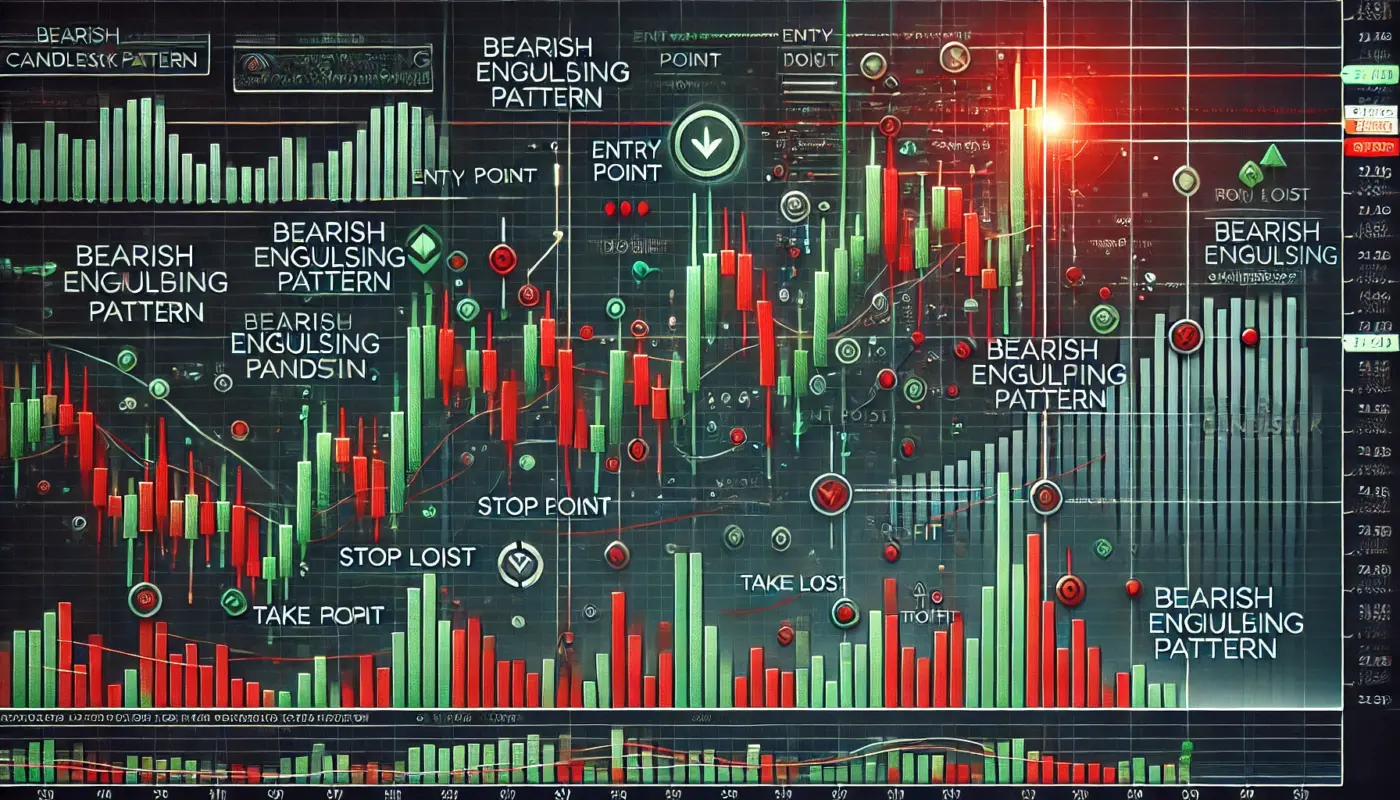
Bearish Engulfing Candlestick Pattern: A Complete Guide to Spotting Trend Reversals
What is the Bearish Engulfing Candlestick Pattern?
The Bearish Engulfing Candlestick Pattern is a two-candle reversal pattern that signals a potential shift from an uptrend to a downtrend. It is widely used in technical analysis to identify price reversals and is a favorite among traders for its reliability when confirmed.
How to Identify the Bearish Engulfing Pattern
- Uptrend Context: The pattern forms during a sustained price uptrend.
- Two-Candle Structure:
- The first candle is a small bullish (green) candle, indicating buying pressure.
- The second candle is a larger bearish (red) candle that completely engulfs the body of the first candle.
Why is the Bearish Engulfing Pattern Important?
This pattern is a strong bearish reversal signal because it shows that sellers have taken control from buyers. It often leads to a downtrend, making it a valuable tool for traders looking to exit long positions or enter short trades.
Trading Strategies Using the Bearish Engulfing Pattern
- Entry: Wait for confirmation, such as a follow-through decline below the engulfing candle’s low.
- Stop-Loss: Place above the high of the engulfing candle to minimize risk.
- Profit Targets: Use support levels, Fibonacci retracements, or a 1:2 risk-reward ratio.
- Combine with Indicators: Use RSI overbought conditions, MACD bearish crossovers, or moving averages for added confirmation.
Common Mistakes to Avoid
- Premature Entries: Avoid trading before confirmation to reduce false signals.
- Ignoring Volume: High trading volume during the pattern increases its reliability.
- Overlooking Market Context: The pattern works best in clear uptrends, not sideways markets.
Example of the Bearish Engulfing Pattern in Action
Imagine a stock in an uptrend forming a small green candle. The next day, it gaps up but reverses sharply, closing below the prior day’s open with a large red candle. This bearish engulfing pattern suggests a reversal. If the next candle continues downward, traders might short-sell with a stop-loss above the pattern’s high.
FAQ
1. What does the Bearish Engulfing Candlestick Pattern indicate?
It indicates a potential trend reversal from an uptrend to a downtrend, signaling that sellers have overpowered buyers.
2. How reliable is the Bearish Engulfing Candlestick Pattern?
The pattern is reliable when confirmed by follow-through price action and high trading volume. Combining it with other indicators like RSI or MACD increases its accuracy.
3. Can the Bearish Engulfing Candlestick Pattern be used in all markets?
Yes, it can be applied to stocks, forex, cryptocurrencies, and other financial markets.
4. What is the difference between a Bearish Engulfing and a Bearish Harami?
A Bearish Engulfing has a larger bearish candle that completely engulfs the prior bullish candle, while a Bearish Harami has a smaller bearish candle contained within the prior bullish candle.
5. Should I always trade the Bearish Engulfing Candlestick Pattern?
No, always wait for confirmation and consider market context, volume, and additional indicators before trading.
FAQ: Bearish Engulfing Candlestick Pattern
It indicates a potential trend reversal from an uptrend to a downtrend, signaling that sellers have overpowered buyers.
The pattern is reliable when confirmed by follow-through price action and high trading volume. Combining it with other indicators like RSI or MACD increases its accuracy.
Yes, it can be applied to stocks, forex, cryptocurrencies, and other financial markets.
A Bearish Engulfing has a larger bearish candle that completely engulfs the prior bullish candle, while a Bearish Harami has a smaller bearish candle contained within the prior bullish candle.
No, always wait for confirmation and consider market context, volume, and additional indicators before trading.
Contents
- 0.1 Bearish Engulfing Candlestick Pattern: A Complete Guide to Spotting Trend Reversals
- 0.1.1 What is the Bearish Engulfing Candlestick Pattern?
- 0.1.2 How to Identify the Bearish Engulfing Pattern
- 0.1.3 Why is the Bearish Engulfing Pattern Important?
- 0.1.4 Trading Strategies Using the Bearish Engulfing Pattern
- 0.1.5 Common Mistakes to Avoid
- 0.1.6 Example of the Bearish Engulfing Pattern in Action
- 0.2 FAQ
- 0.2.1 1. What does the Bearish Engulfing Candlestick Pattern indicate?
- 0.2.2 2. How reliable is the Bearish Engulfing Candlestick Pattern?
- 0.2.3 3. Can the Bearish Engulfing Candlestick Pattern be used in all markets?
- 0.2.4 4. What is the difference between a Bearish Engulfing and a Bearish Harami?
- 0.2.5 5. Should I always trade the Bearish Engulfing Candlestick Pattern?
- 1 FAQ: Bearish Engulfing Candlestick Pattern